Are Townhouses a Good Investment in Victoria?

Key Takeaways
- Key considerations for townhouse investments include location, land component, and potential fees, not just the property type itself.
- Townhouses can be an excellent investment when combined with a strong location and low body corporate fees, offering a lower entry cost and less maintenance than many standalone houses.
- Capital growth potential is usually linked to how much land you effectively own and the quality of the suburb for example, proximity to public transport, schools, jobs, and essential amenities, rather than whether the property is a house, townhouse, or apartment.
- Homebuyers Centre focuses on well-located, turnkey townhouse developments across Victoria, but this article does not provide personal financial advice or guarantee returns.
What Affects a Townhouse’s Investment Potential?
Townhouses in Victoria can be a solid investment property option when the fundamentals line up. The question “do townhouses increase in value?” is really a question about local rental demand, land scarcity, and how those forces filter into long term capital growth over a decade or more.
Before choosing a townhouse investment, consider the property, location and complete cost of ownership.
| Factor | What to consider |
|---|---|
| Location | Access to transport, employment, schools, shops and everyday services. |
| Local demand | Who is likely to rent or buy in the area and the type of home they need. |
| Land and title | What you own and whether the development includes common property. |
| Purchase price | How the complete cost compares with similar properties in the area. |
| Rental potential | Expected rent, local vacancy conditions and likely tenant demand. |
| Ongoing costs | Owners corporation fees, rates, insurance, maintenance and property management. |
| Future supply | The number and type of similar properties planned or available nearby. |

Do You Own the Land in a Townhouse?
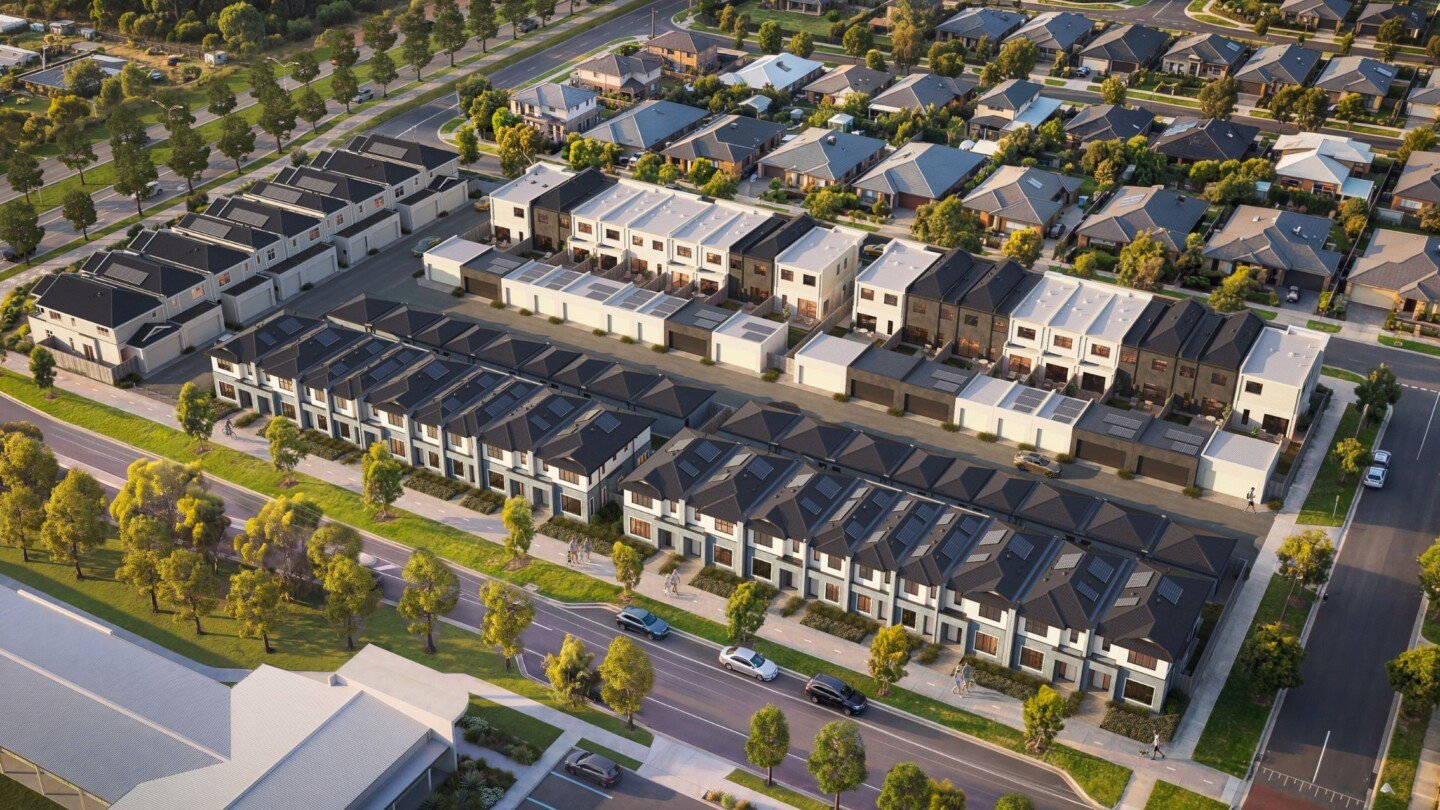
Land ownership in a townhouse depends on the title structure – some townhouses sit on their own titled land while others sit under a strata or owners corporation arrangement where land is shared as common property.
You may own the townhouse and the land within your individual lot. The development may also contain common property, such as a shared driveway, pathway, visitor parking or landscaped area.
Before buying, review the plan of subdivision and contract documents to understand:
- The boundaries of your individual lot
- What land and structures you own
- Whether common property is included
- Whether an owners corporation applies
- Who is responsible for shared areas
- Any rules affecting the use of the property
A conveyancer or legal representative can help explain the title and ownership arrangements before you sign a contract.
Body Corporate Fees and Other Ongoing Costs to Factor In
In Victoria, a body corporate, formally called an owners corporation, is the legal entity that manages shared areas where there is common property in a subdivision. Owners pay regular fees to support this management, but not every townhouse has them.
Body corporate fees typically contribute to:
- Building insurance for the shared building structure
- Garden and common property upkeep
- Maintenance of shared driveways, lighting, and entry points
- Any shared services such as bin stores or security gates

Body corporate fees cover shared maintenance and insurance for townhouses, and for body corporate titled properties these body corporate fees are generally paid quarterly.
Body corporate fees can increase ongoing holding costs, and strata fees can impact net rental yield if they are substantial.
Complexes with lifts, pools, or extensive landscaping tend to carry higher strata levies, which reduce cash flow and should be weighed against any lifestyle appeal or rental appeal those features provide.
Capital Growth, Cash Flow and the Land Component
Most Victorian property investors balance two goals: capital growth over the long term and sustainable cash flow in the short to medium term. Townhouses can sit in a middle ground on both measures.
A townhouse’s land-to-asset ratio, the share of the purchase price that is effectively land value, influences how it grows over time.
Townhouses can experience strong capital growth over time, and they typically experience capital growth in established suburbs where land is scarce. However, over 25 years of data, detached houses typically outperform townhouses in capital gains, largely because freestanding houses carry a much higher land share.
Balance rental income with long-term potential
Property investors often consider both the income a property may generate and its potential to increase in value over time.
Rental yield can help indicate how much rental income a property may produce relative to its purchase price. Capital growth describes an increase in the property’s value over time. Neither outcome is guaranteed.
They may be influenced by:
- The original purchase price
- Local housing demand and supply
- Interest rates and broader economic conditions
- Population and employment changes
- Infrastructure investment
- The home’s condition and ongoing upkeep
- The amount and type of land attached to the property
It is worth testing different scenarios before buying. Consider whether you could continue holding the property if interest rates, rent, vacancy periods or ownership costs changed.

How Homebuyers Centre Supports Victorian Townhouse Investors
Homebuyers Centre is a townhouse specialist in Victoria, focusing on premium, affordable townhouse developments and turnkey townhouse solutions in areas such as Melbourne’s growth corridors and key regional centres like Geelong. The team helps buyers understand layouts, inclusions, and locations through guided townhouse tours before any commitment – especially valuable for first-time investors or first-home buyers considering rentvesting.
Support includes explaining title structures, expected owners corporation arrangements, and typical ongoing costs, while encouraging buyers to seek independent advice on loan structures and tax. Construction timing in townhouse developments can depend on sales milestones, and the brand is transparent about these timelines rather than promising immediate build starts.
Frequently Asked Questions
Townhouses can be a good investment in Victoria when they are well located, have a sensible land component, and the numbers, entry cost, rent, ongoing expenses, stack up for the individual buyer. They often allow buyers to access suburbs they couldn’t otherwise afford, but performance still depends on suburb fundamentals such as jobs, transport, schools, and future infrastructure. There is no single “best” property type, and independent financial advice should be sought before purchasing an investment property.
Many Victorian townhouses have increased in value over the past couple of decades, especially in established suburbs where land is scarce. The rate of capital growth is influenced by suburb demand, land component, build quality, and broader economic conditions rather than just the fact a property is a townhouse. Research recent sales data in specific suburbs and speak with local professionals to understand how townhouse values have behaved in your target area.
Not always. Some townhouses in Victoria are on their own individually titled lots with no shared land, while others form part of an owners corporation arrangement where land is shared as common property. The plan of subdivision and section 32 documents will clarify exactly what you own.
No. Whether a townhouse has body corporate or owners corporation fees depends on the title structure and whether there is common property to manage. A pair of townhouses on separate, individually titled lots may have no shared areas and therefore no ongoing fees, while a larger development with a shared driveway or gardens usually will. Always review the owners corporation documents before purchase.
Most townhouses, especially modern builds, involve less day-to-day maintenance than older detached houses because of smaller gardens and newer construction. Some external maintenance may be handled collectively through an owners corporation, which simplifies upkeep but shows up as strata fees instead. Compare both the likely maintenance workload and total ongoing costs when deciding between a townhouse and a house.